The Giving of Gifts

December 23, 2011

A friend of mine recently lost a parent. Another is going through a divorce. One I know is spending the holidays alone. Another is working to avoid such a fate. I know some who struggle with depression during seasons that scream, “BE HAPPY!” I know others who close their eyes, hold their breath, and wait for it all to be over.
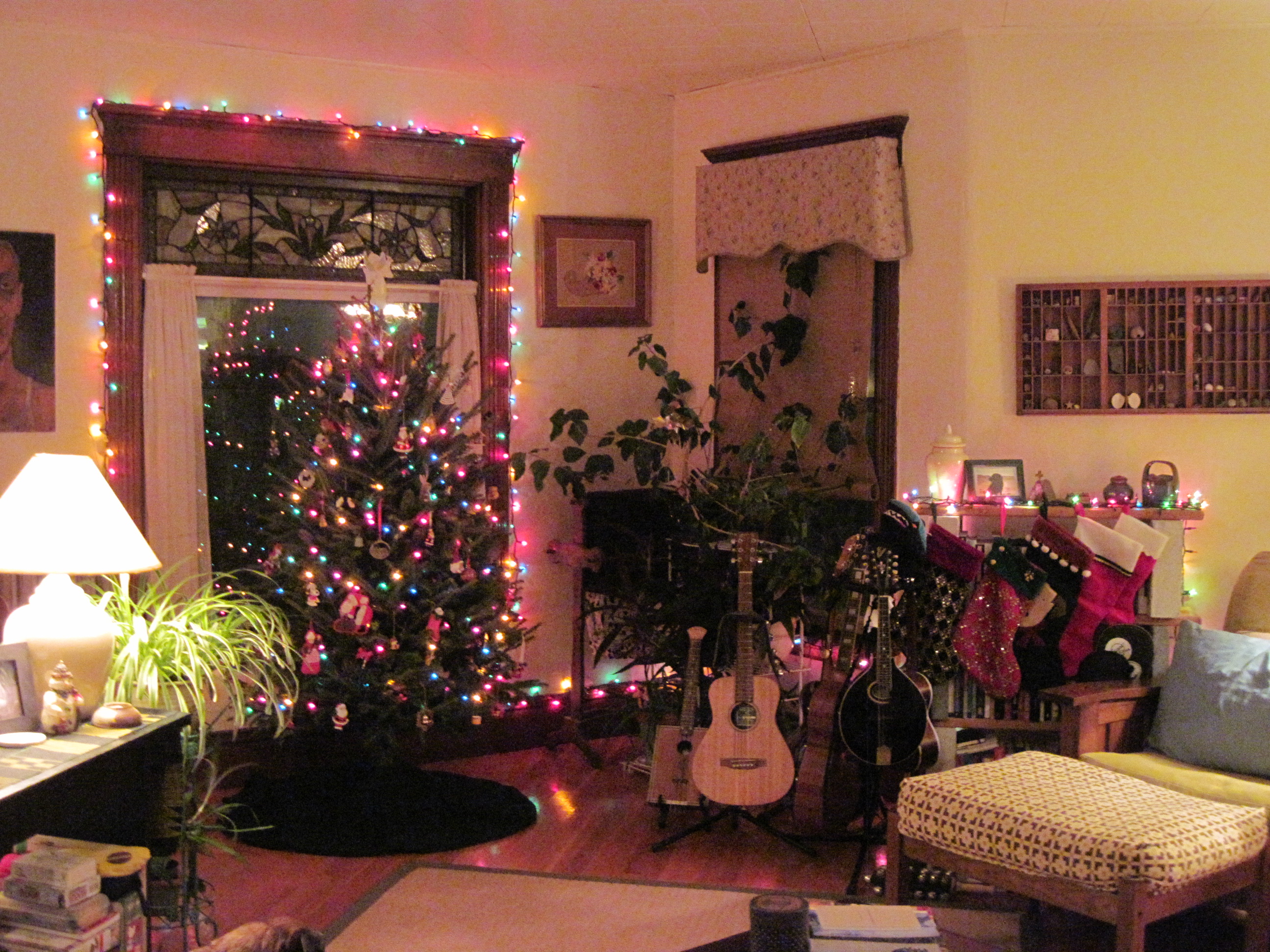
Christmas Today

I was reminded the other day of a Christmas that brought the deepest kind of sadness to me, something that may have been even harder to take given how much I love the season. The semester was coming to a close. I was finishing up finals and in only a few days would go home; home to a house that I’d grown up in and where I’d spent every Christmas morning of my life that I could remember. I was set to go home to something that I’d always looked forward to; a time and a place where every tradition was expected, followed, and enjoyed. Until now.

I wondered if there would be a tree. I knew that there would be no special presents, the perfect kind bought months before when they’d been spotted at a store and purchased with love. I didn’t know if I’d have any presents, or at least any surprises. I knew there’d be no stockings hung, no candles in the windows, no smells of cider and cinnamon from the kitchen. I imagined there would be church on Christmas Eve, but I didn’t want to go. It wouldn’t be the same. Everyone would notice.

As I went through the motions of studying and finishing papers, I also worked my shifts in the dining hall, assisting the cooks. This was back before feeding people was deemed an appropriate activity to outsource; back when a university hired adults to cook meals and students to help them, to serve others on the lines, to work the dish line, to scrub pots and pans, to swipe IDs. I worked in the dining hall throughout my years in college, finding it both a great source of beer money and one of the most fun jobs I have ever had (still, to this day).

I worked as a Cook’s Aid (a position you had to be promoted to, mind you) alongside a couple of older guys, retired cooks from the Navy; two black women who reminded you of characters out of good Southern writing, strong and opinionated and wise, and who you minded no matter what; several women who had cooked in large quantity for most, if not all, of their working lives; Mary, who ran the ship and served as a surrogate mother to the students who worked for her, always firm and caring; and Robin. Robin was younger than any of the other adults, yet older than any of us students. She was just the right age, compared to us, to be both hip and authoritative.

I’d come to love all of these adults very much, especially over the past year as they each, in their own way, looked after me, making sure I was okay. Rarely did anyone ever ask me outright, “Are you okay?” but I could feel concern in the looks they gave me from time to time, the extra hug I’d receive at the end of a shift. I knew they cared, but it wasn’t until this December came around and the looming sadness prevailed that I learned how much.

I was cleaning up at the end of a dinner shift, wiping out the pass-throughs, the heated sections between the kitchen and each serving line where we placed pans of food to replenish the lines. I was using the Lime-Away to brighten up the stainless steel, the hard brushes to make things shine. I closed the door, like an oven “thwump”, and turned to go towards the bulletin board, to see the schedule and punch out, when I ran into Robin. She had in her hands a small Christmas tree, about 18″ tall, fully decorated with lights and red ball ornaments. She had tears in her eyes as she held it out to me.

“I couldn’t stand the thought that you might not have a tree,” she said.

I had tears in my eyes now, too.

“Take this with you, just in case.”

She gave me a hug and I cried harder than I wanted to. I could see the other cooks and a couple of my fellow student workers out of the corner of my eye. Even the old sailors’ eyes were moist.

I took the tree back to my room in the sorority house. A few days later, I packed my suitcase and went home. There wasn’t yet a tree, but my dad and I did go get one together. He didn’t buy many any surprises, but took me shopping and told me to pick out a few things that I wanted or needed. We ate a Christmas Eve supper of spaghetti at the Sabarro in the mall; a far cry from the dining room table set with candles and the best china and the Waterford crystal glasses that only came out of the hutch this one night each year. We got dressed up and went to church for the candlelight service. People asked about school and gave me hugs. We drove home and then my dad left to go over to a friend’s house, leaving me all alone on the evening Santa comes to town. I’ve long ago forgiven my father for this act, but have to admit I’ve never forgotten.

But I’ve also never forgotten that small tree, that gift given “just in case”. It was maybe the kindest and most thoughtful gift I’ll ever be given. In those times when we’re really sad, when our hearts are broken and hope is gone, what can be better than the gift of thoughtfulness and care, of something to show love just in case we need it? Because we always do.

Thank you, Robin, wherever you are.


Hope in Things Unseen

December 23, 2011

From this bank at this spot in summer I can always see tadpoles, fat-bodied, scraping brown algae from a sort of shallow underwater ledge. Now I couldn’t see the ledge under the ice. Most of the tadpoles were frogs, and the frogs were buried alive in the mud at the bottom of the creek. They went to all that trouble to get out of the water and breathe air, only to hop back in before the first killing frost. The frogs of Tinker Creek are slathered in mud, mud at their eyes and mud at their nostrils; their damp skins absorb a muddy oxygen, and so they pass the dreaming winter.

~ Footfalls in  a Blue Ridge Winter, Sports Illustrated, February 4, 1974

Whenever I falter, when I find myself losing hope in the world, I read Annie Dillard, for surely there exists something bigger and greater than humanity to have created such a voice.


Wise Words on Creativity, Formal Education, and Life-long Learning

December 21, 2011

I posed a question to MEDLIB-l yesterday, a listserv for medical librarians. The previous day I had both read a story and heard an interview on public radio about MITx, the new online learning option launched by the Massachusetts Institute of Technology. Stanford has a similar offering, as do other top-tier universities, I imagine. The premise is to allow anyone to sit in on current courses taught, via an online classroom; to take part in the same lectures, assignments, and tests as the matriculating students. Unlike open course ware (also offered by MIT and others), MITx provides the simultaneous learning platform, a learning community, for anyone to engage in and with. A person completing all of the work for the course on time may also request, for a small fee, a certificate of completion, thus giving some level of credit for the learning achieved.

The question I posed to my colleagues centered on whether or not people thought this model will serve as one for continuing education in the future. Specifically, I asked:

This story in the Chronicle and the one on WGBH radio (Boston) last night are both about MIT’s new online certification program. Stanford also started a similar model this past semester with a few classes – one of databases that I’ve followed, though admit that I’ve not done all of the homework.

I find these to be pretty progressive in thinking about education and wonder if it’s the way many of us will seek continuing education in the future. There is a lot of discussion on lists, at meetings and at conferences, on blogs, etc. about skills needed for the future, remaining relevant, and saving the profession. Do such offerings pique the interests of working professionals? Could you and/or would you find the time to commit yourself to the workload they require? They are free in terms of dollars spent, but certainly not in time and effort.

I was asking myself these questions last night as I heard the story on the way home (and had seen the Chronicle piece earlier in the day). I’m wondering what others think.

You may or may not be aware of the struggles the library profession, in particular medical librarians, are facing regarding their relevance and importance in the world of healthcare and medical research today. For years, searching for, securing and providing information was possible only through the gateway of the library. The internet, over time, has removed these barriers to information, making everything from journal articles to bibliographic databases available to users on their desktops, smartphones and iPads.

We can argue all day whether or not the information found by the user is as good in quality as that found by the professional, i.e. the librarian, but more and more this is a mute point. The information sought and found is often “good enough” for the purpose(s) and the thought of going to a library and/or asking the assistance of a librarian for such never enters one’s mind. This being the case, justified anxiety rises amongst the members of my profession; concern over not only our jobs today, but the very existence of the profession in the future. Hand-wringing and Chicken Little aside, the issue is real and calls for a thorough review of the skills librarians have, the skills they are being taught in graduate school, and the gaps between these skills and the ones needed to work in today’s medical and/or academic environment.

I received many thoughtful replies from colleagues. Some pointed out the difference in formal continuing education, i.e. recognized by a professional organization, and taking courses such as these. There were concerns expressed about the time commitment and whether or not employers would either support or recognize these type of learning activities. Some expressed the need to take such classes, but perhaps in a different time-frame. Others asked about the teachers and graders – who does this? In general, everyone who replied felt that another option for learning new skills is welcomed. The need is there, thus the more ways to fill it is appreciated.

One colleague struck a particular chord for both me and another librarian on the list. To paraphrase, he stated that the biggest concern should be learning what you need to learn to do what you need to do; beyond the graduate degree requirement for the librarian, few people look for credentials or extra credits. I liked this a lot. Learning what you need to learn to do what you need to do.

Going through Twitter this morning, I came across a tweet by one of my favorites to follow, Brain Pickings (@brainpicker). She pointed to a story by my very favorite author, Annie Dillard, that appeared in a 1974 issue of Sports Illustrated. Her tweet is filled with good advice. Heed it and read the piece:

More interesting, though, was that this particular tweet was preceded in my Twitter stream by one from Mother Jones referencing an article on Maria Popova herself. Maria Popova’s Beautiful Mind: The creator of Brain Pickings on how to think outside the corporate box, by Hanna Levintova. Of course, as it had so fortuitously landed where it did in my Twitter account, I followed the link and read the interview. It is a wonderful interview that reveals a few telling clues about what makes a person working with information truly successful today. More importantly for me, it had a section that spoke directly to the question I’d asked of my colleagues – thoughts on how we grow and learn and stay relevant in today’s world:

MJ: Have you always been so committed to information-consumption?

MP: Well, it’s an interesting thing. I didn’t really—at least intellectually and creatively—have a particularly compelling experience in college. But during my junior year, they made the TED talks public. So I started listening to them. They were producing one per day, and I was listening to one per day, every day, at the gym. And then I discovered PopTech and other kind of intellectual-ish, online portals for curiosity. Very quickly, I just got so much more out of those than from so-called “Ivy League” education that I knew it was on me to keep myself stimulated, and to keep learning, more than anything. And, because I paid my way through college, I was working at Penn, two to four jobs at a time to pay for school.

MJ: And in the middle of all this, you also found time to start Brain Pickings?!

MP: [Laughs.] It was crazy, crazy times. Well, one of my jobs was at a start-up ad agency. They were trying to do things differently, work with socially conscious clients, and to really be a more creative take on advertising than the industry itself. But I noticed that what the guys at the office were circulating for inspiration still came from within the ad industry. I thought that was really counterintuitive—to only borrow inspiration from within your own industry. So I started Brain Pickings as just a Friday, email newsletter, going out to my colleagues there, with five links, to five really different things that had nothing to do with advertising—from a vintage train map of Europe, to a Japanese short film from 1920, to the latest technology. Eventually I saw that these guys were forwarding these emails to friends of theirs that were in really different disciplines, not just creative ones—but writers, lawyers, students, whatever. So, I decided on top of all the jobs and school, to take a night class and teach myself web design and coding, just enough to get by. That’s how it started. And in the process, I was still digging into the things I was featuring, and in that process, you learn so much more than you do in a lecture. The whole life-long learner thing—this just became my way of doing that.

[emphasis mine]

More and more today, I believe that this really is the key to being successful in our field, and I define success not as accolades and a sense of grand importance on behalf of our institutions  (though those are sometimes, often, important), but as a sense of fulfillment; a sense of joy in the work we do. I believe that I am successful when, like Popova, I find myself stimulated and engaged and feeling most like the work I do through a fairly substantial portion of my life is … interesting.

Who amongst us longs for the career where we are nothing more than frustrated, day in and day out, by things well beyond our control? The internet is here to stay and with it, the searching habits, the access to information, and the “good enough” principle that keeps things moving at the speed that we, evidently, are convinced we must move. To rail against these things is a waste of energy. It seems to me, the people who enjoy life most are the ones who put their energies towards more constructive behavior, like learning what you need to learn to do what you need to do. The other is, to put it in my more common vernacular, “A waste of time, dude!”